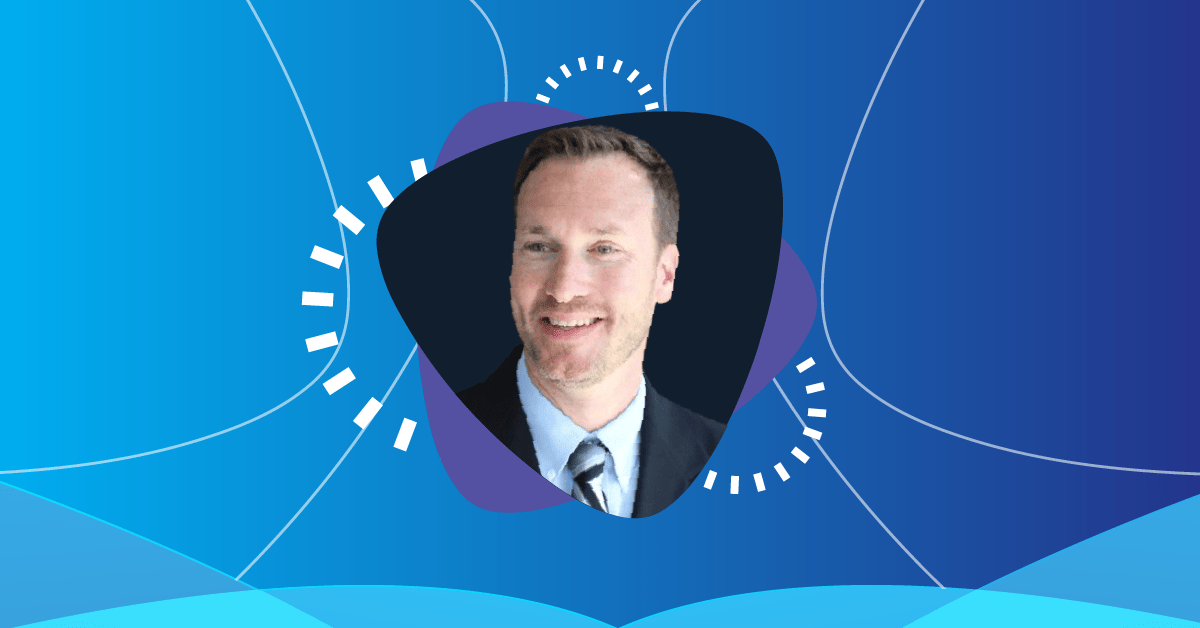
A conversation with Chris DePerro, our new EVP of Solutions Architecture and Customer Transformation
Apex Digital Solutions recently welcomed Chris DePerro to our team as our EVP of Solutions Architecture and Customer Transformation. As we continue to work with larger and more complex customer environments, this role is focused on helping organizations move from strategy to execution with clarity, consistency, and confidence.
We sat down with Chris to talk about his background, what he’ll be focused on day-to-day, and how he sees customers navigating transformation in the years ahead. In this conversation, he shares how he approaches large-scale change, the challenges organizations are facing right now, and where he sees the biggest opportunities for customers to create real, measurable impact.
Tell us about your background and what led you to focus on large-scale transformation work.
I grew up in the industry as a hands-on engineer where I designed and operated networks, data centers, and Microsoft platforms before stepping into leadership. That grounding keeps me curious and close to the work. I still enjoy rolling up my sleeves, prototyping, and learning new tools so I understand what’s practical for teams on the ground.
Once I moved from building systems to building teams, I led global consulting and transformation for organizations serving enterprise customers, guiding them through complex migrations and modernization programs while keeping reliability and security front and center. That combination of engineering depth and organizational leadership naturally pulled me toward large-scale transformation where the margin of error is small, and decisions need to balance risk, operational continuity, and long-term scalability.
What draws me to this work is the responsibility that comes with it: making disciplined, high-impact decisions up front so organizations can move forward safely, confidently, and without unnecessary turbulence.
What does your role as EVP of Solutions Architecture and Customer Transformation look like in practice?
Day to day, I split my time between customer strategy and enabling our solutions teams. With customers, I aim to ensure that value shows up quickly and safely. That means shaping roadmaps and putting the right guardrails in place with security, identity, data, and governance.
Inside Apex Digital, I partner with Solution Architects, Delivery, and Customer Success to align offers, reference architectures, and playbooks that drive consistency and quality at scale. The goal is to make engagements smoother for customers, reduce risk, and accelerate time to value while we scale into larger and more complex environments.
It also means I get to stay close to the technology. I enjoy experimenting with tools like Copilot to find practical ways they can help customers work more effectively and help our teams design, deliver, and support solutions with more clarity and confidence.
How does your background leading complex cloud and transformation initiatives shape the way you approach customer engagements?
Across large organizations, the same problems show up again and again. It’s often unclear who owns key decisions, guardrails are missing or inconsistent, and projects focus on completing a migration instead of improving how the business actually operates.
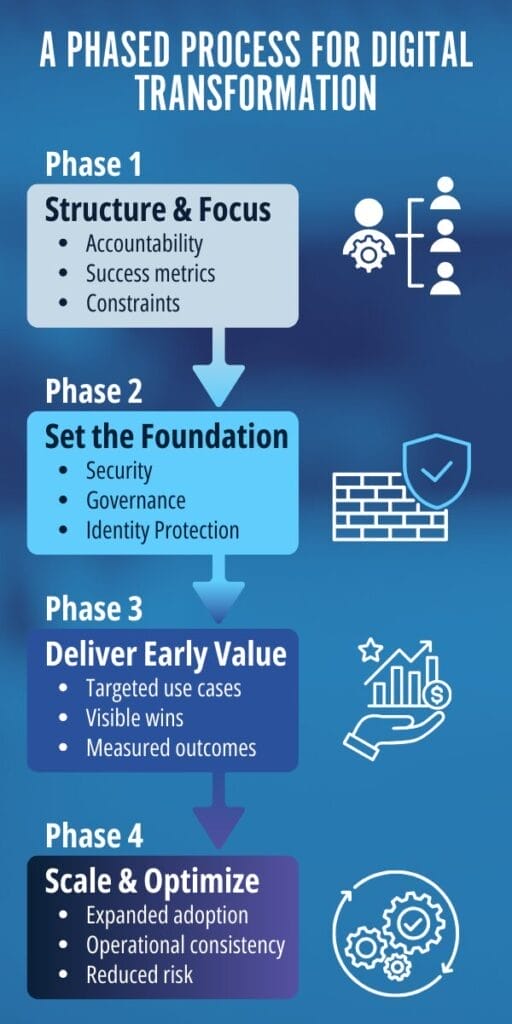
Because of that, I start every engagement by bringing structure and focus. We get clear on who is accountable, what success looks like, and what constraints we need to respect. From there, we break the work into phases that deliver real, visible progress early while putting the right foundations in place to support what comes next. That approach keeps teams aligned and avoids the kind of all-or-nothing projects that create unnecessary risk.
What are the biggest challenges you foresee customers facing in 2026?
First and foremost: AI readiness.
Many teams are experimenting with AI tools like Copilot and ChatGPT. But without the identity, data, and protection controls required for scale, they run into significant challenges with data sprawl and potential data leaks. Building foundational strength with security and governance while proving value in targeted use cases will separate leaders from laggards.
Second, maintaining a strong security posture amid evolving threats and regulatory requirements, especially for multinational operations, requires clear ownership, continuous monitoring, and right-sized automation.
Finally, prioritization. Budgets are finite, so the work that wins in 2026 will be projects that show noticeable impact on security, cost, and efficiency within two quarters, not two years.
What does it mean for an organization to be truly ready for transformation?
Readiness is more than the desire to change and adopt the new technology (though sometimes that is half the battle). The real challenge is in the structure. Signals include a current-state inventory that leaders trust, executive sponsorship with clear accountabilities, and funded product owners who can steward change after go-live.
Before making major changes, customers should assess identity and access, data classification and protection, platform guardrails, and operating model maturity. When those pieces are in place, transformation shifts from one-time projects to a repeatable capability that continuously improves security, cost, and efficiency.
You’ve led large, distributed teams. How does that experience influence how we scale at Apex Digital?
Global scale rewards consistency and clarity. We’ll lean into lightweight playbooks, reusable reference architectures, and common ways of working so teams can move fast without reinventing the wheel.
At the same time, we’ll protect flexibility at the edges by empowering teams closest to the customer to adapt within guardrails. Communities of practice, shared metrics, and regular architecture reviews create a feedback loop that keeps quality high as customer environments grow.
How does the introduction of your role impact our customers and partners?
Customers gain a clear accountable owner for architecture and transformation outcomes. Someone focused on aligning business goals with secure, pragmatic solutions. That elevates trust and reduces friction across delivery, consulting, and customer teams.
For partners, especially in the Microsoft ecosystem, it means tighter alignment on solution patterns and co-selling motions, so we present a unified approach and deliver with confidence.
What excites you most about joining Apex Digital at this stage?
The people and the mission. Apex Digital is at a great moment. We’re large enough to have real reach and focused enough that individual leaders can meaningfully shape our direction.
For customers, I see opportunities to modernize securely, simplify operations, and put AI to work where it matters. For the team, I’m excited to mentor, learn, and build the frameworks that help everyone do their best work.
In the next 12–24 months, success looks like a portfolio of repeatable offers, strong reference architectures, measurable improvements in customer outcomes, and wins in larger, more complex environments.
What Microsoft technologies are you most excited about right now, and why?
I’m energized by Copilot across Microsoft 365 and Azure. When paired with strong identity, data protection, and governance, it changes how work gets done. I’m also excited about the Power Platform and Dataverse as a way to close process gaps quickly with secure, low-code building blocks.
Under the hood, advances across Microsoft Entra, Defender, and Purview are enabling the secure-by-default patterns customers need, while Azure’s AI and data services open up new opportunities for insight and automation. The big picture is practical AI on a secure foundation.
Closing Thoughts
As organizations plan for 2026, the difference between momentum and friction will come down to clarity, ownership, and making the right foundational decisions early. Chris’s approach reflects how Apex Digital helps customers move forward with confidence, even as environments grow more complex.